As sustainability becomes a priority for businesses and consumers, plant based packaging is quickly replacing traditional plastic across the foodservice industry. Restaurants, cafés, caterers, and households are looking for cleaner, safer, and more eco-friendly packaging solutions that reduce waste without sacrificing quality.
From takeaway containers to drink cups and food wraps, plant-based alternatives are now stronger, more practical, and more affordable than ever before.
At BIOGreen SG, we provide durable, leak-proof, restaurant-grade packaging solutions designed for modern food businesses in Singapore.
In this guide, we’ll explore what plant based packaging is, why demand is growing, and why switching now can benefit your business.
What Is Plant Based Packaging?
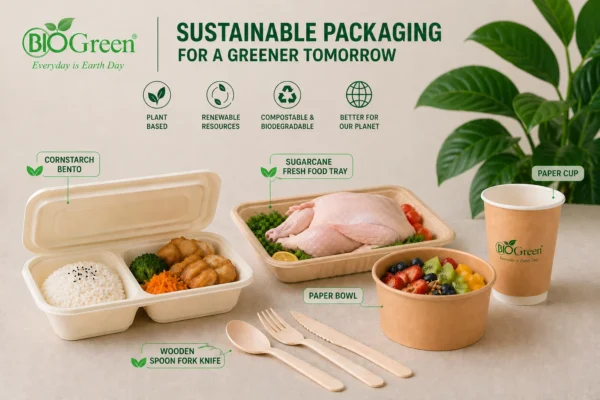
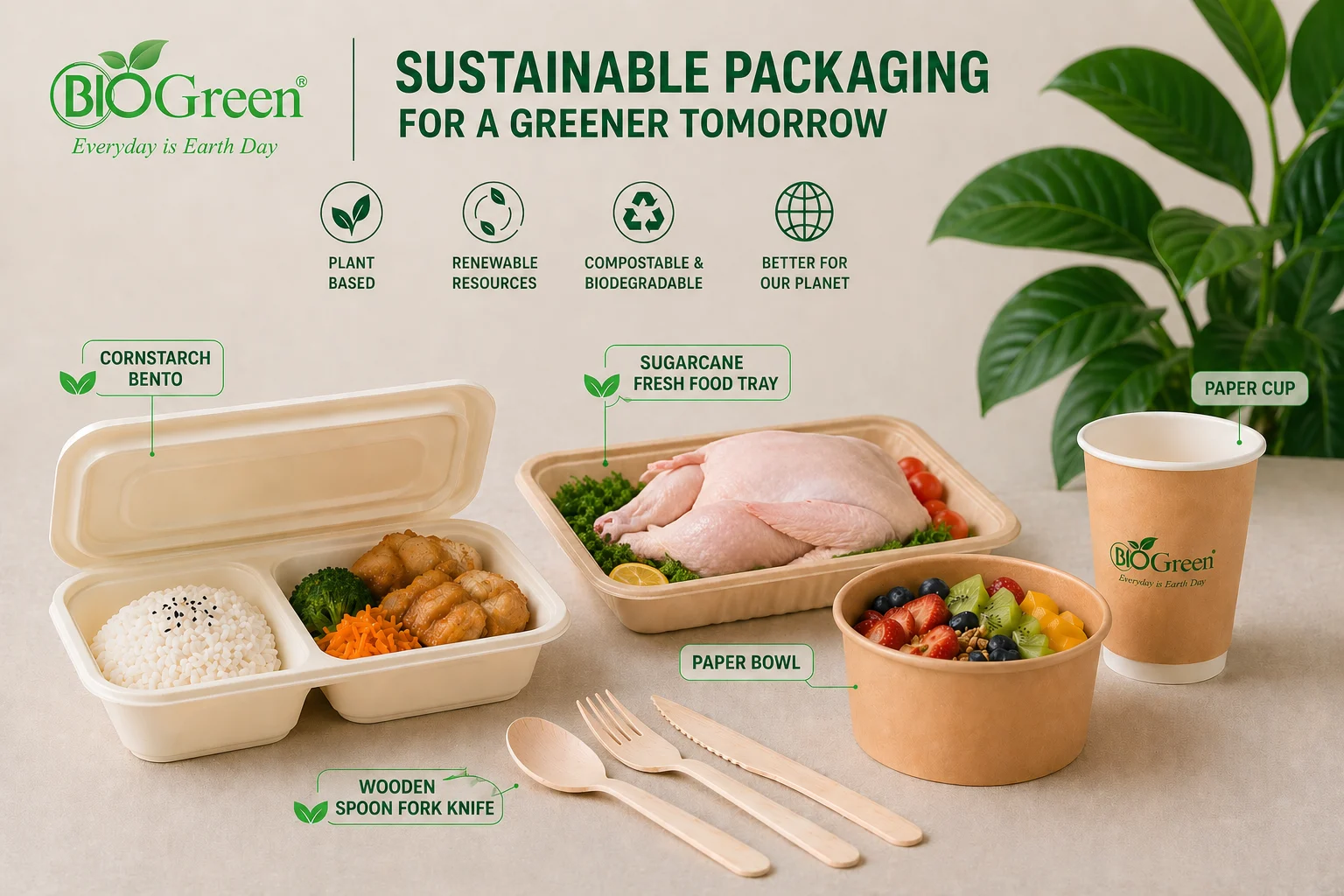
Plant based packaging refers to packaging materials made from renewable plant resources instead of fossil-fuel plastics. These materials are commonly produced from:
- Cornstarch
- Sugarcane fibre (bagasse)
- Bamboo pulp
- Recycled paper
- PLA bioplastic made from corn starch
- Other natural plant fibres
Unlike conventional plastics, plant-based packaging helps reduce dependence on petroleum-based materials and supports a more circular economy.
Popular examples include:
- Cornstarch cups
- Cornstarch takeaway boxes
- Plates and bowls
- Cutlery
- Food wraps
- Garbage bags
- Disposable trays
- Biodegradable food container options
Why Businesses Are Switching to Plant Based Packaging
Consumer habits are changing rapidly. More customers now care about packaging waste, food safety, and environmental responsibility.
Businesses that adopt sustainable packaging often gain:
- Stronger Brand Image
Customers notice businesses making eco-conscious decisions. Sustainable packaging helps position your brand as modern, responsible, and customer-focused.
- Better Customer Experience
Today’s plant-based packaging is durable, stylish, and practical. No one wants flimsy containers or leaking takeaway boxes.
- Future Readiness
Many governments worldwide are tightening restrictions on single-use plastics. Switching early helps businesses stay ahead.
- Competitive Advantage
Consumers increasingly choose brands aligned with their values. Packaging can influence purchase decisions.
Main Benefits of Plant Based Packaging
Eco-Friendly Materials
Made from renewable resources like corn and plant fibres, plant-based packaging reduces reliance on fossil fuels.
Lower Environmental Impact
Compared with conventional plastics, many plant-based materials produce lower carbon emissions during production.
Safe for Food Contact
Many products are designed to be food-safe, BPA-free, and suitable for hot or cold food.
Strong and Leak-Proof
Modern cornstarch packaging can be sturdy enough for delivery, takeaway, and dine-out use.
Attractive Presentation
Clean, premium packaging improves how food looks and feels to customers.
Popular Plant Based Packaging Products for Businesses
Perfect for cold beverages, juices, smoothies, and takeaway drinks.
Benefits:
- Strong cup structure
- Clean presentation
- Better eco image for beverage brands
Cornstarch Food Containers
Excellent for rice meals, noodles, salads, and takeaway dishes.
Benefits:
- Leak-resistant lids
- Strong structure
- Suitable for delivery platforms
Garbage Bags (Plant-Based Options)
Great for kitchens, offices, and commercial cleaning operations.
Popular for home and commercial kitchens due to convenience and reduced cleaning time.
Useful for hygiene, catering, and household storage.
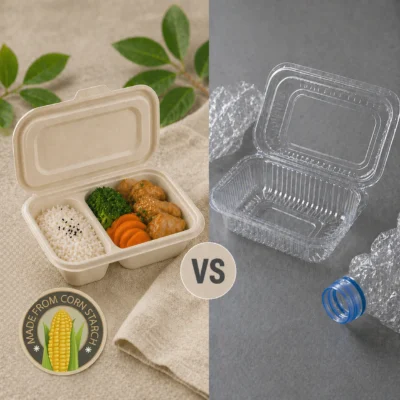
Plant Based Packaging vs Traditional Plastic
Feature | Plant Based Packaging | Traditional Plastic |
Raw Material | Renewable plants | Petroleum |
Environmental Impact | Lower | Higher |
Brand Perception | Positive | Increasingly negative |
Food Safety | Excellent options available | Depends on type |
Waste Reduction Goals | Supports | Limited |
Consumer Preference | Rising demand | Declining appeal |
Traditional plastic may still be common, but demand is shifting toward smarter alternatives.
Understanding Bioplastic and Biodegradable Plastic
Many businesses ask about the difference between bioplastic and biodegradable plastic.
Bioplastic refers to plastic-like materials made partly or fully from renewable plant sources such as corn starch or sugarcane.
Biodegradable Plastic
This means the material can break down under specific environmental or industrial composting conditions.
Important note: not all bioplastics are automatically biodegradable, and disposal methods may vary depending on product type.
That’s why choosing a trusted supplier matters.
Why Cornstarch Packaging Is Popular in Singapore
Singapore’s food delivery, takeaway, and café market creates strong demand for practical sustainable packaging.
Cornstarch packaging is especially popular because it offers:
- Strong durability
- Professional appearance
- Convenient single-use hygiene
- Reliable takeaway performance
- Better sustainability image
For busy F&B businesses, functionality matters just as much as eco-friendliness.
Commercial Use Cases for Plant Based Packaging
Restaurants
Use takeaway containers, bowls, cups, and cutlery for dine-out and delivery orders.
Cafés
Use drink cups, lids, dessert containers, and food wraps.
Catering Companies
Serve large events with cleaner, premium disposable solutions.
Corporate Offices
Use pantry supplies, cups, food containers, and garbage bags.
Supermarkets & Retailers
Use ready-meal containers and packaging for convenience foods.
Households
Perfect for parties, meal prep, picnics, and everyday convenience.
Upgrade to Sustainable Plant Based Packaging with BIOGreen SG Today
Choosing plant-based packaging is more than an eco-friendly trend — it is a smart business decision for brands that want to stay competitive, reduce environmental impact, and meet growing customer expectations. From durable cornstarch cups to leak-proof biodegradable food container solutions, sustainable packaging helps improve both operations and brand image.
At BIOGreen SG, we provide high-quality cornstarch packaging, bioplastic, and foodservice packaging designed for restaurants, cafés, offices, retailers, and households across Singapore.
Ready to switch to stronger, cleaner, and more sustainable packaging? Contact BIOGreen SG today and discover reliable plant based packaging solutions built for modern businesses.