
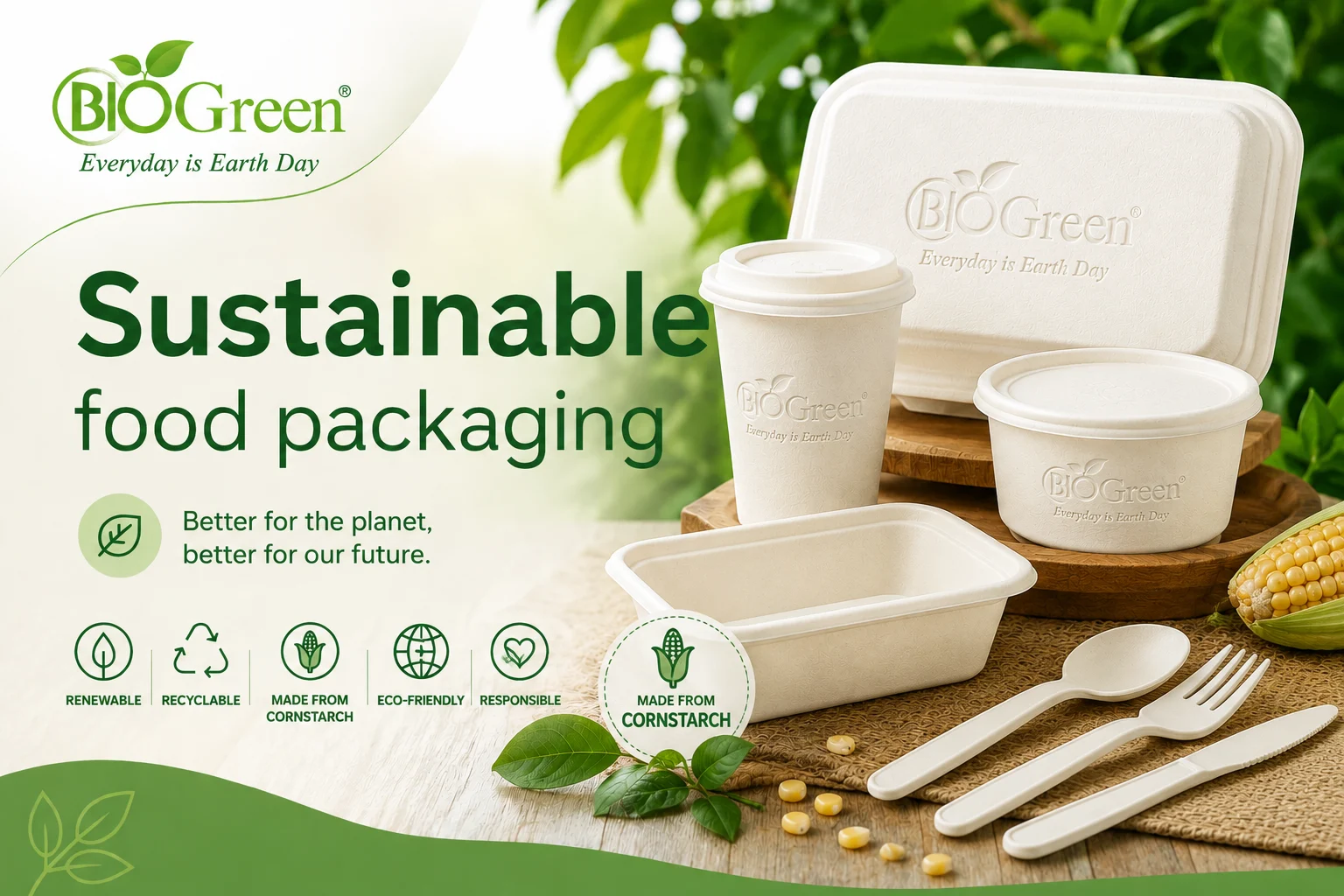
Biodegradable Packaging: The Future of Sustainable Food Packaging in Singapore

As businesses and consumers become more environmentally conscious, biodegradable packaging has become one of the most important solutions in reducing plastic waste and improving sustainability.
From takeaway food containers and disposable cutlery to garbage bags and food wraps, eco-friendly packaging is rapidly replacing conventional plastic across Singapore’s F&B and retail industries.
But what exactly is biodegradable packaging? Is it the same as compostable packaging? And why are more restaurants, cafes, and businesses switching to sustainable alternatives?
In this guide, we’ll explain everything you need to know about biodegradable packaging, its benefits, commercial applications, and how businesses can make smarter packaging choices for a greener future.
What Is Biodegradable Packaging?
Biodegradable packaging refers to packaging materials that naturally break down over time through microorganisms such as bacteria, fungi, and environmental processes.
Unlike traditional plastics that can remain in landfills for hundreds of years, biodegradable materials decompose much faster under the right conditions.
Common biodegradable packaging materials include:
- Cornstarch
- Sugarcane bagasse
- PLA (Polylactic Acid)
- Kraft paper
- Bamboo fiber
- Plant-based bioplastics
These materials are commonly used for:
- Food containers
- Bento boxes
- Disposable cutlery
- Food trays
- Garbage bags
- Food covers
- Cups and lids
As Singapore continues to push toward sustainability goals, biodegradable packaging has become increasingly important for businesses looking to reduce environmental impact while maintaining product quality.
Biodegradable vs Compostable Packaging: What’s the Difference?
Many people confuse biodegradable and compostable packaging, but they are not exactly the same.
Biodegradable Packaging
Biodegradable products break down naturally over time into smaller organic components such as:
- Water
- Carbon dioxide
- Biomass
However, decomposition speed depends on environmental conditions like heat, moisture, and microorganisms.
Some biodegradable plastics may still leave behind microplastic residues if not processed properly.
Compostable Packaging
Compostable packaging is designed to fully decompose into nutrient-rich compost without releasing harmful toxins.
Industrial composting conditions usually require:
- High temperatures
- Controlled humidity
- Proper oxygen levels
Compostable packaging must meet stricter environmental standards compared to general biodegradable products.
Quick Comparison Table
Feature | Biodegradable Packaging | Compostable Packaging |
Breaks down naturally | Yes | Yes |
Leaves harmful residue | Sometimes | No |
Produces nutrient-rich compost | Not always | Yes |
Requires industrial composting | Sometimes | Usually |
Eco-friendly disposal | Moderate | Excellent |
In simple terms:
- All compostable packaging is biodegradable
- Not all biodegradable packaging is compostable
Why Businesses Are Switching to Biodegradable Packaging
The demand for sustainable packaging is growing rapidly across Singapore.
Consumers are now more likely to support businesses that prioritize environmentally friendly packaging solutions.
Here are the main reasons why companies are making the switch.
- Reduces Plastic Waste
Traditional plastic packaging contributes heavily to pollution and landfill overflow.
Biodegradable packaging helps reduce long-term waste because it decomposes naturally over time.
For F&B businesses with high takeaway volume, switching to biodegradable food containers can significantly lower environmental impact.
- Improves Brand Image
Modern consumers care about sustainability.
Using eco-friendly packaging helps businesses:
- Build customer trust
- Strengthen brand reputation
- Appeal to environmentally conscious customers
- Differentiate from competitors
Restaurants and cafes that adopt sustainable packaging often gain stronger customer loyalty and positive social perception.
- Supports Singapore Sustainability Goals
Singapore is actively promoting sustainable practices and reducing disposable plastic waste.
Businesses that adopt biodegradable packaging early position themselves ahead of future regulations and consumer expectations.
This is especially important for:
- Restaurants
- Catering companies
- Cloud kitchens
- Supermarkets
- Retail brands
- Safe for Food Contact
High-quality biodegradable packaging is designed to be food-safe and durable.
Modern restaurant-grade biodegradable products offer:
- Heat resistance
- Leak-proof performance
- Oil resistance
- Strong durability
- Microwave suitability
This makes them suitable for both hot and cold food applications.
Common Types of Biodegradable Packaging
There are many forms of biodegradable packaging available today.
Cornstarch Packaging
Cornstarch packaging is one of the most popular eco-friendly alternatives to plastic.
Benefits include:
- Renewable plant-based material
- Durable and sturdy
- Suitable for takeaway food
- Heat-resistant
- Lower environmental impact
Cornstarch containers are widely used for:
- Bento boxes
- Meal containers
- Food trays
- Disposable cutlery
Bagasse Packaging
Bagasse is made from sugarcane fiber leftover after juice extraction.
It is commonly used for:
- Food trays
- Plates
- Bowls
- Clamshell containers
Advantages include:
- Compostable material
- Strong structure
- Grease resistance
- Natural appearance
Bagasse packaging is especially popular in cafes and takeaway businesses.
PLA and CPLA Packaging
PLA is a plant-based plastic alternative made from renewable starch sources.
CPLA is a stronger, heat-resistant version commonly used for disposable utensils.
These materials are often used for:
- Cups
- Lids
- Cutlery
- Straws
Compared to regular plastic utensils, CPLA products offer:
- Better durability
- Improved heat resistance
- Industrial compossibility
Challenges of Biodegradable Packaging
Although biodegradable packaging offers many benefits, there are still challenges businesses should understand.
- Industrial Composting Requirements
Some biodegradable materials require industrial composting facilities for proper breakdown.
Without proper disposal systems, decomposition may take longer than expected.
- Higher Initial Costs
Eco-friendly packaging can sometimes cost more than traditional plastic.
However, many businesses consider this a worthwhile investment due to:
- Stronger branding
- Better customer perception
- Long-term sustainability value
- Consumer Education
Many consumers are still confused:
- Biodegradable
- Compostable
- Recyclable
- Oxo-degradable
Businesses should educate customers on proper disposal methods to maximize environmental benefits.
How to Choose the Right Biodegradable Packaging
When selecting biodegradable packaging for your business, consider the following:
- Material Type
Choose materials based on your product needs:
- Cornstarch for durable food containers
- Bagasse for compostable trays and plates
- PLA/CPLA for cups and utensils
- Heat Resistance
Ensure packaging can handle:
- Hot food
- Microwave heating
- Food delivery temperatures
- Leak-Proof Performance
Food delivery packaging should prevent spills and maintain food presentation.
Restaurant-grade biodegradable containers should offer secure lids and durable structure.
- Certifications
Look for products that comply with:
- FDA standards
- SGS testing
- ISO certifications
- Singapore Green Label requirements
These certifications ensure product safety and environmental compliance.
The Future of Packaging Is Sustainable
Biodegradable packaging is no longer just a trend — it has become an essential part of responsible business operations.
As consumers become more environmentally conscious, businesses that adopt sustainable packaging solutions will gain stronger customer trust and long-term competitive advantages.
Understanding the difference between biodegradable and compostable materials allows businesses to make smarter packaging decisions that support both operational needs and environmental goals.
With durable, food-safe, and eco-friendly packaging solutions, businesses can reduce waste without compromising quality or performance.
Ready to switch to sustainable packaging?
Explore premium biodegradable packaging solutions at BIOGreen SG today and take the next step toward a greener future.