
What Is Biodegradable? A Simple Guide to Eco-Friendly Packaging and Sustainable Living

As sustainability becomes more important for businesses and consumers, more people are asking: what is biodegradable and why does it matter?
From food packaging and garbage bags to takeaway containers and disposable cutlery, biodegradable products are becoming a popular alternative to traditional plastic. Restaurants, cafes, retailers, and households are increasingly choosing eco-friendly materials that reduce environmental impact while maintaining convenience and durability.
But what exactly does biodegradable mean? How does it compare to recyclable materials? And what is non-biodegradable waste?
In this guide, we’ll explain everything you need to know about biodegradable products, their benefits, commercial applications, and why businesses in Singapore are moving toward sustainable packaging solutions.
What Is Biodegradable?
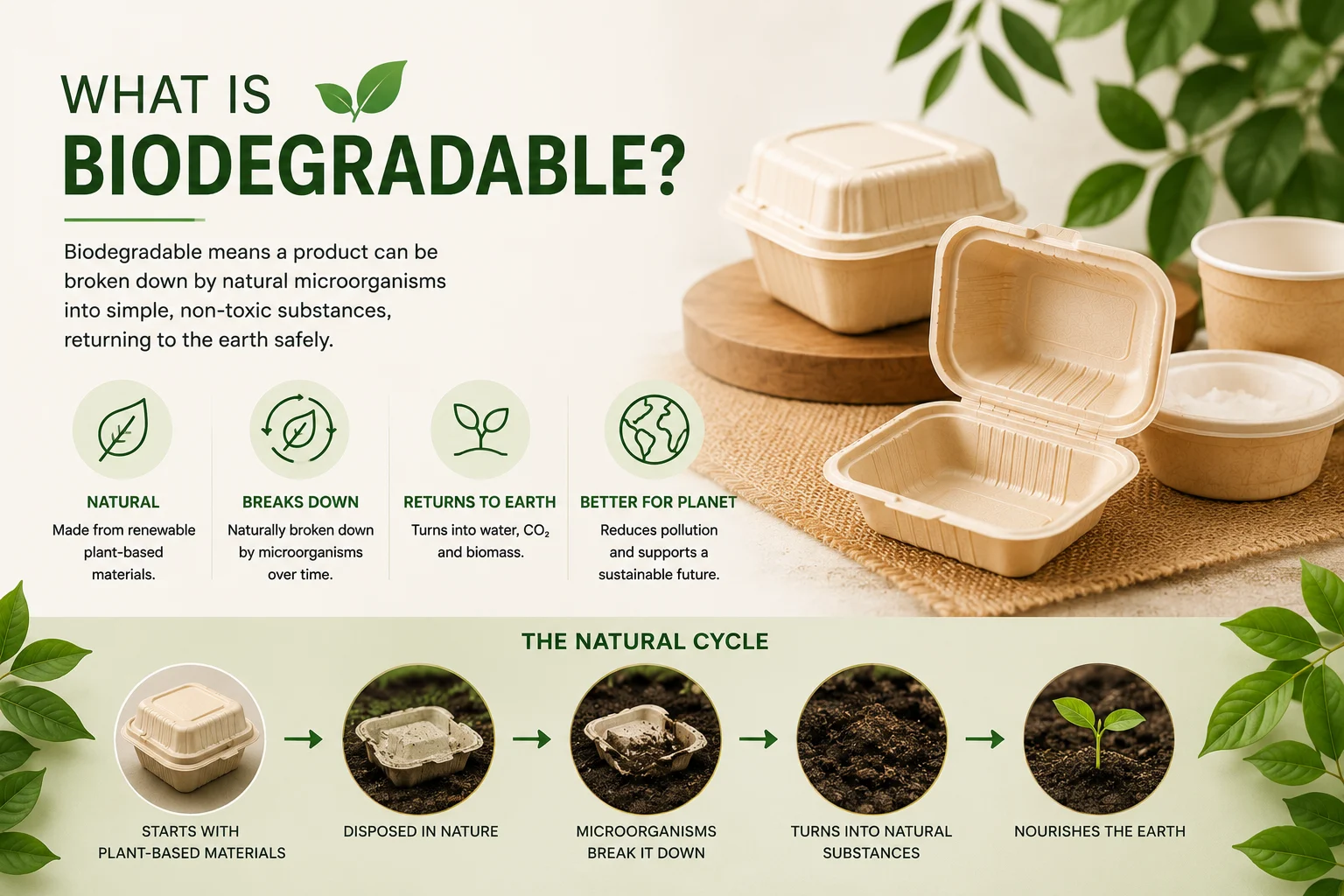
Biodegradable refers to materials that can naturally break down into harmless substances through the action of microorganisms such as bacteria and fungi.
When a product is biodegradable, it decomposes over time into natural elements like:
- Water
- Carbon dioxide
- Organic matter
Unlike conventional plastic, biodegradable materials do not remain in the environment for hundreds of years.
In simple terms:
Material Type | Decomposition Time |
Food waste | Weeks to months |
Paper | Months |
Cornstarch packaging | Several months |
Traditional plastic | Hundreds of years |
Most biodegradable products are made from renewable plant-based materials such as:
- Cornstarch
- Sugarcane bagasse
- Bamboo fiber
- Vegetable oils
- Natural paper pulp
These materials are designed to reduce pollution and support a cleaner environment.
What Is Non-Biodegradable?
To better understand biodegradable materials, it’s important to know what non-biodegradable waste is.
Non-biodegradable materials cannot naturally decompose within a short period of time. They remain in landfills, waterways, and oceans for decades or even centuries.
Common non-biodegradable materials include:
- Traditional plastic
- Styrofoam
- Synthetic rubber
- Metal cans
- Glass
- Polyester fabrics
These materials often create long-term environmental problems because they:
- Accumulated in landfills
- Pollute oceans and rivers
- Harm wildlife
- Release microplastics
- Increase waste management costs
For example, a regular plastic takeaway container may take over 400 years to break down completely.
This is one reason why businesses and governments worldwide are encouraging the switch to biodegradable packaging solutions.
How Does Biodegradation Work?
Biodegradation happens naturally through microorganisms that feed on organic materials.
The process usually follows these stages:
- Exposure to Natural Conditions
The material comes into contact with moisture, heat, oxygen, and microorganisms.
- Breakdown by Microorganisms
Bacteria and fungi begin digesting the material.
- Conversion Into Natural Elements
Over time, the material becomes:
- Water
- Carbon dioxide
- Biomass
- Organic matter
The speed of decomposition depends on:
- Material type
- Temperature
- Humidity
- Composting conditions
- Thickness of the product
Some biodegradable products decompose faster in industrial composting facilities than in normal landfill conditions.
Common Examples of Biodegradable Products
Biodegradable products are now used in many industries, especially in food packaging and daily household applications.
Biodegradable Food Packaging
One of the fastest-growing categories is eco-friendly food packaging.
Examples include:
- Cornstarch takeaway containers
- Sugarcane bagasse trays
- Compostable bowls and cups
- Biodegradable cutlery
- Food wrapping paper
These products are commonly used by:
- Restaurants
- Cafes
- Catering companies
- Food delivery businesses
- Hawker stalls
BIOGreen SG provides restaurant-grade biodegradable food packaging designed to be:
- Leak-proof
- Durable
- Heat-resistant
- Suitable for takeaway and delivery
Biodegradable Garbage Bags
Biodegradable garbage bags are made from plant-based materials such as cornstarch.
Compared to regular plastic trash bags, they break down more naturally over time.
Benefits include:
- Reduced plastic waste
- Lower environmental impact
- Better sustainability practices
- Suitable for homes and businesses
Star-sealed biodegradable garbage bags are especially popular because they offer stronger leak resistance and improved durability.
Biodegradable Disposable Cutlery
Eco-friendly disposable utensils are commonly made from:
- Cornstarch
- Bamboo
- Wood
- PLA materials
These products help reduce single-use plastic waste while still offering convenience for:
- Takeaway meals
- Events
- Catering
- Outdoor dining
What Is the Difference Between Recyclable and Biodegradable?
Many people confuse recyclable and biodegradable products, but they are not the same.
Understanding what the difference between recyclable and biodegradable is important for proper waste management.
Feature | Biodegradable | Recyclable |
Breaks down naturally | Yes | No |
Requires processing facility | Not always | Yes |
Returns to natural elements | Yes | No |
Can be reused as raw material | Sometimes | Yes |
Common materials | Cornstarch, paper, bamboo | Glass, metal, plastic |
Biodegradable Products
Biodegradable products decompose naturally over time.
Examples:
- Cornstarch food containers
- Paper bags
- Sugarcane trays
Recyclable Products
Recyclable materials must be processed in recycling facilities to become new products.
Examples:
- Aluminum cans
- Glass bottles
- Certain plastics
Some products can be both biodegradable and recyclable, depending on their materials and manufacturing process.
Benefits of Biodegradable Products
Reduces Environmental Pollution
Biodegradable products help reduce waste accumulation in:
- Landfills
- Oceans
- Beaches
- Waterways
Unlike traditional plastics, they break down more naturally and safely.
Supports Sustainable Business Practices
Businesses using eco-friendly packaging demonstrate environmental responsibility.
This helps:
- Improve brand image
- Attract eco-conscious customers
- Increase customer trust
- Support ESG goals
Many consumers today actively prefer sustainable brands.
Reduces Plastic Waste
Plastic pollution is a growing global problem.
Switching to biodegradable packaging helps reduce dependence on fossil fuel-based plastics and lowers overall waste production.
Safer Food Contact
Many biodegradable food packaging products are made from food-safe materials.
High-quality biodegradable packaging can offer:
- Heat resistance
- Leak-proof performance
- Oil resistance
- Safe direct food contact
This makes them suitable for professional F&B operations.
Supports Government Sustainability Goals
Many countries, including Singapore, are encouraging businesses to reduce single-use plastics and adopt greener alternatives.
Using biodegradable packaging helps businesses stay aligned with future environmental regulations and sustainability initiatives.
Challenges of Biodegradable Products
Although biodegradable materials offer many benefits, proper disposal remains important.
Some biodegradable products require:
- Composting environments
- Industrial composting facilities
- Proper waste separation
If disposed of incorrectly, decomposition may take longer.
Businesses and consumers should always follow local disposal guidelines for best environmental results.
Why Businesses in Singapore Are Choosing Biodegradable Packaging
Singapore consumers are becoming increasingly environmentally conscious.
Today’s customers care about:
- Sustainability
- Waste reduction
- Eco-friendly brands
- Responsible packaging
Businesses that adopt biodegradable packaging often gain a competitive advantage by appealing to modern consumer preferences.
For F&B businesses especially, eco-friendly packaging is no longer just a trend — it is becoming an industry expectation.
Moving Towards a More Sustainable Future
Now that you understand what is biodegradable, it’s clear why more businesses and households are choosing eco-friendly alternatives over traditional plastic products. Biodegradable packaging helps reduce pollution, supports responsible waste management, and creates a cleaner environment for future generations.
From takeaway containers and garbage bags to disposable cutlery and food packaging, biodegradable products are becoming an important part of modern sustainable living. For restaurants, cafes, catering companies, and retailers, switching to eco-friendly packaging also helps strengthen brand image and meet the growing demand for greener business practices.
At Biogreen SG, we are committed to providing durable, leak-proof, and restaurant-grade biodegradable packaging solutions for businesses and households across Singapore. Whether you need cornstarch food containers, biodegradable garbage bags, food covers, or eco-friendly kitchen essentials, our products are designed to combine sustainability with everyday practicality.
Explore Biogreen SG’s range of eco-friendly packaging solutions and take the next step towards smarter, more sustainable packaging choices for your business and daily operations.