
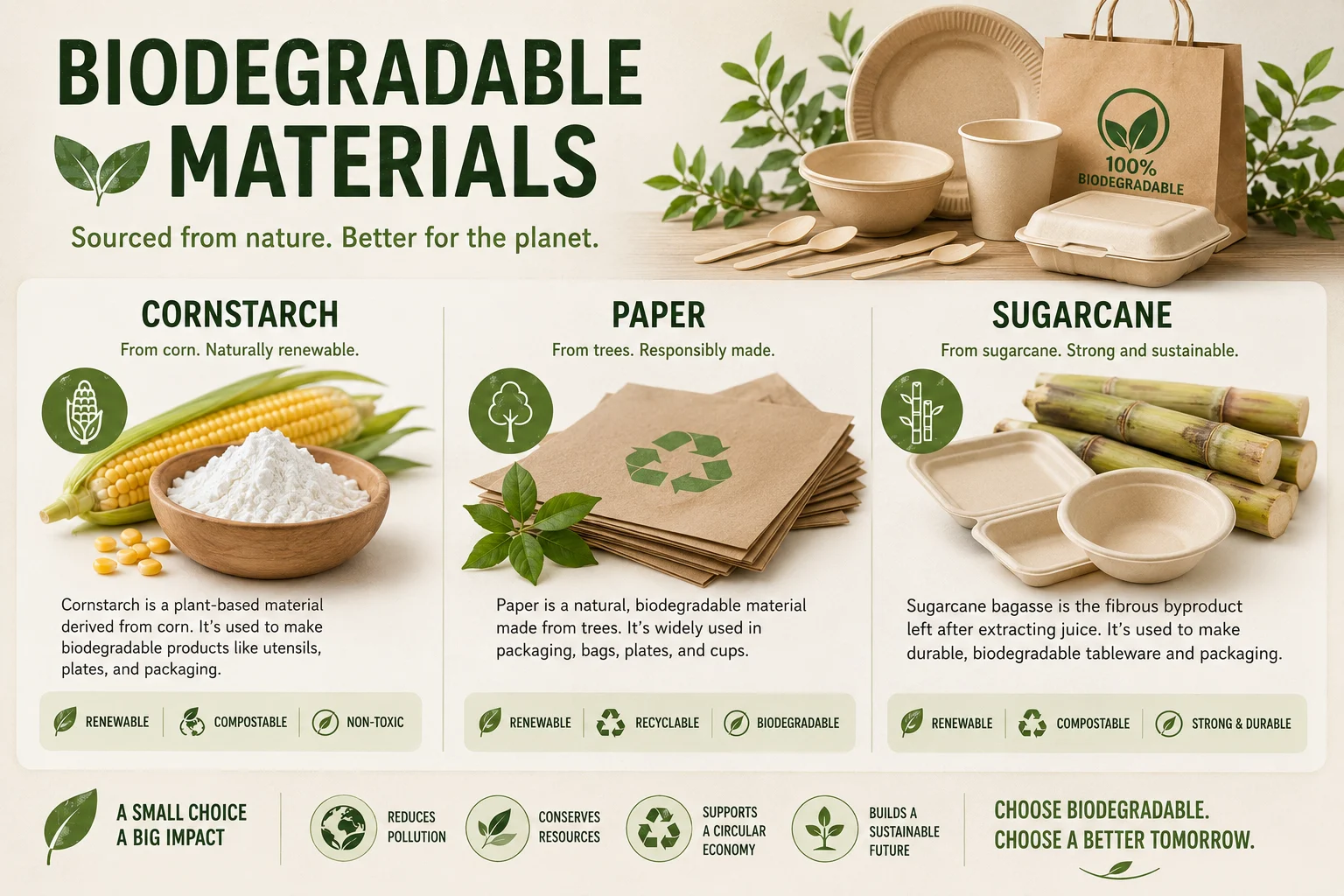
Biodegradable Materials: A Smarter and Greener Future for Food Packaging

As environmental concerns continue to grow worldwide, businesses and consumers are becoming more conscious about the materials they use every day. From takeaway containers to garbage bags and disposable cutlery, traditional plastic waste has become one of the biggest environmental challenges today.
This is why biodegradable materials are gaining popularity across industries, especially in the food and beverage (F&B) sector. Restaurants, cafes, catering companies, and households are now actively seeking sustainable alternatives that reduce environmental impact without sacrificing quality and convenience.
In this guide, we will explore what biodegradable materials are, their benefits, common types, commercial applications, and why they are shaping the future of eco-friendly packaging in Singapore.
What Are Biodegradable Materials?
Biodegradable materials are substances that can naturally break down into water, carbon dioxide, and organic matter through the action of microorganisms such as bacteria and fungi.
Unlike traditional plastics that may remain in landfills or oceans for hundreds of years, biodegradable materials decompose much faster under suitable environmental conditions.
These materials are commonly made from renewable resources such as:
- Cornstarch
- Sugarcane bagasse
- Cellulose
- Bamboo fibers
- Plant starches
- Bioplastics such as PLA (Polylactic Acid)
Today, biodegradable materials are widely used in food packaging, garbage bags, disposable utensils, food wraps, and many other everyday products.
Why Are Biodegradable Materials Important?
Plastic pollution has become a global issue affecting landfills, rivers, oceans, and wildlife. Single-use plastic products contribute heavily to environmental waste because they are difficult to decompose naturally.
Biodegradable materials help reduce this burden by offering a more sustainable solution.
Environmental Benefits of Biodegradable Materials
- Reduces Plastic Waste
Traditional plastics can take hundreds of years to degrade. Biodegradable alternatives break down more naturally and reduce long-term waste accumulation.
- Helps Protect Marine Life
Plastic waste often ends up in oceans, where marine animals accidentally consume microplastics. Biodegradable materials can help reduce the amount of persistent plastic pollution entering marine ecosystems.
- Lower Carbon Footprint
Many biodegradable products are made from renewable plant-based resources instead of petroleum-based materials. This helps reduce dependency on fossil fuels.
- Supports Sustainable Business Practices
Consumers are becoming increasingly eco-conscious. Businesses that use biodegradable packaging often improve their brand image and attract environmentally aware customers.
- Safer Disposal
Many biodegradable products produce fewer harmful residues when decomposing or being incinerated compared to traditional plastics.
Common Types of Biodegradable Materials
Different biodegradable materials are used for different purposes depending on durability, heat resistance, and food safety requirements.
Cornstarch-Based Materials
Cornstarch packaging is one of the most popular biodegradable solutions in the food packaging industry.
It is widely used for:
- Bento containers
- Takeaway food boxes
- Cups
- Disposable cutlery
- Garbage bags
Advantages
- Durable and leak-proof
- Suitable for hot and cold food
- Renewable resource
- Food-safe
- Lightweight and practical
Cornstarch containers are especially popular among restaurants and food delivery businesses in Singapore.
Bagasse (Sugarcane Fiber)
Bagasse is made from sugarcane pulp left after juice extraction.
It is commonly used for:
- Food trays
- Plates
- Bowls
- Clamshell takeaway boxes
Advantages
- Compostable
- Microwave-safe
- Strong and sturdy
- Natural appearance
- Oil and grease resistant
Bagasse packaging is highly suitable for takeaway meals and catering services.
PLA (Polylactic Acid)
PLA is a biodegradable plastic made from fermented plant starch such as corn.
It is often used for:
- Cold drink cups
- Transparent lids
- Salad containers
- Food wrapping
Advantages
- Clear and lightweight
- Plant-based material
- Lower carbon emissions than petroleum plastics
However, PLA generally performs best in industrial composting conditions.
Cellulose-Based Materials
Cellulose comes from plant fibers and wood pulp.
Applications include:
- Food wraps
- Packaging films
- Disposable products
- Eco-friendly bags
Some cellulose-based materials can biodegrade relatively quickly in natural environments.
Biodegradable Materials vs Traditional Plastic
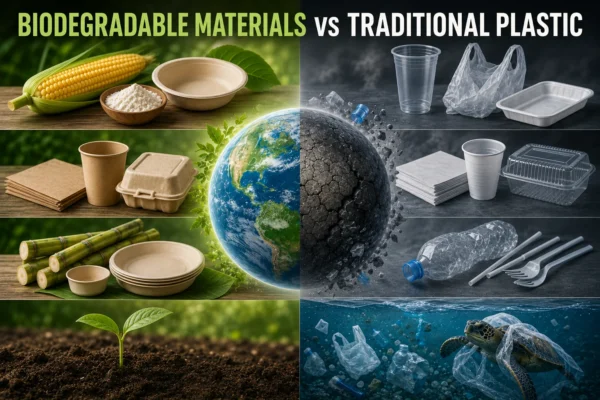
The following comparison helps businesses understand the difference between conventional plastic and biodegradable alternatives.
Feature | Traditional Plastic | Biodegradable Materials |
Source | Petroleum-based | Plant-based or renewable |
Decomposition Time | Hundreds of years | Months to years |
Environmental Impact | High pollution | Lower environmental impact |
Marine Pollution Risk | High | Reduced |
Renewable Resource | No | Yes |
Eco-Friendly Branding | Limited | Strong sustainability appeal |
While biodegradable materials may sometimes cost more initially, many businesses see long-term value through improved customer trust and sustainable branding.
Challenges of Biodegradable Materials
While biodegradable materials offer many advantages, there are still some limitations businesses should understand.
Specific Decomposition Conditions
Some biodegradable plastics require composting facilities or controlled environments to break down efficiently.
Higher Production Costs
Biodegradable materials are often more expensive than conventional plastics due to raw material and manufacturing costs.
Recycling Compatibility
Some biodegradable plastics may interfere with traditional plastic recycling systems if disposed incorrectly.
However, as technology improves and demand increases, biodegradable materials are becoming more affordable and accessible.
Why Businesses Are Switching to Biodegradable Packaging
Consumer preferences are changing rapidly. Many customers now actively support businesses that use sustainable packaging.
Businesses that adopt biodegradable materials can benefit from:
- Stronger brand reputation
- Better customer loyalty
- Improved sustainability positioning
- Reduced environmental footprint
- Alignment with eco-friendly regulations and initiatives
In Singapore’s competitive F&B industry, sustainable packaging can become an important competitive advantage.
Choosing the Right Biodegradable Packaging Supplier
When selecting biodegradable products, businesses should look for packaging that is:
- Durable and leak-proof
- Food-safe
- Heat resistant
- Suitable for takeaway and delivery
- Certified to safety and environmental standards
- Reliable for commercial use
Not all biodegradable products offer the same quality. Strong and restaurant-grade packaging is essential for maintaining customer satisfaction.
Moving Towards a More Sustainable Future
Biodegradable materials are becoming an essential part of modern packaging solutions as businesses and consumers look for ways to reduce plastic waste and environmental impact. From cornstarch containers and bagasse packaging to biodegradable garbage bags and food covers, these eco-friendly alternatives help support a cleaner and more sustainable future without compromising on quality or convenience.
For restaurants, cafes, catering companies, and households, switching to biodegradable packaging is not only a responsible environmental choice but also a smart business decision that aligns with growing consumer demand for sustainable products.
At Biogreen SG, we provide durable, leak-proof, and restaurant-grade biodegradable packaging solutions designed for everyday commercial and household use. Explore our wide range of eco-friendly food packaging products and discover practical solutions that support both your business and the environment.