
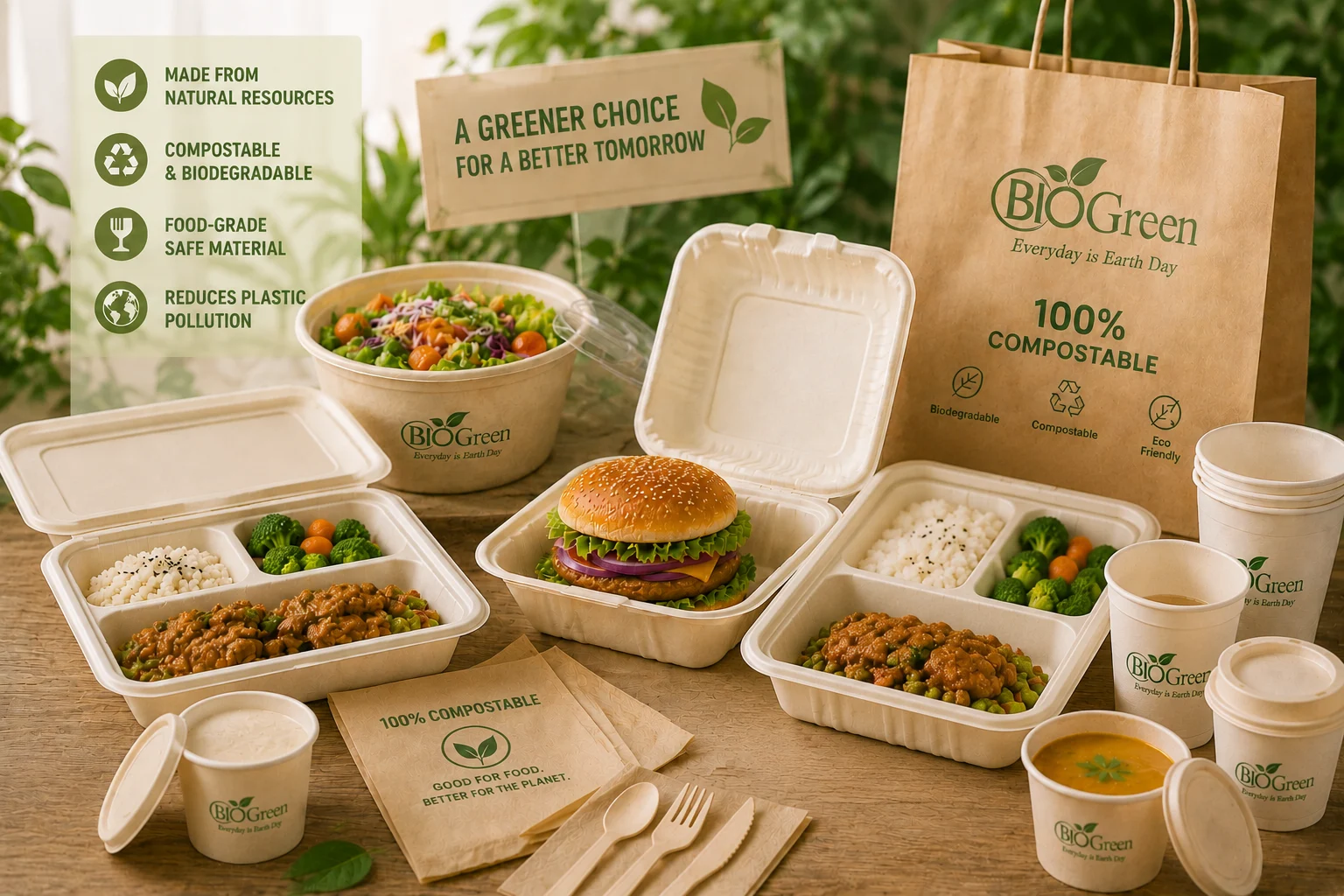
Compostable Food Packaging: A Smarter & Sustainable Choice for Modern Food Businesses

As sustainability becomes increasingly important in Singapore and around the world, more restaurants, cafes, catering companies, and households are switching to compostable food packaging as a practical alternative to traditional plastic packaging.
From takeaway containers and disposable cutlery to food trays and cups, compostable packaging helps reduce environmental impact while maintaining the durability and convenience businesses need for daily operations.
For F&B businesses, eco-friendly packaging is no longer just a trend — it has become part of modern customer expectations. Consumers are becoming more environmentally conscious and are actively supporting brands that adopt sustainable practices.
In this guide, we’ll explain what compostable food packaging is, how it differs from biodegradable packaging, its benefits, commercial applications, and why businesses in Singapore are making the switch.
What Is Compostable Food Packaging?
Compostable food packaging refers to packaging materials that can naturally break down into non-toxic organic matter under composting conditions.
Unlike traditional plastic, compostable packaging decomposes into:
- Water
- Carbon dioxide
- Biomass
- Nutrient-rich organic matter
These materials are usually made from renewable plant-based resources such as:
- Cornstarch
- Sugarcane bagasse
- Bamboo fibre
- Kraft paper
- PLA (plant-based bioplastic)
Compostable packaging is designed to reduce landfill waste and support a more sustainable waste management system.
How Compostable Food Packaging Works
Compostable materials break down through natural biological processes involving microorganisms, heat, oxygen, and moisture.
Depending on the material and composting environment, the packaging may decompose within a few months instead of taking hundreds of years like traditional plastic.
Common Compostable Packaging Products
Some popular compostable food packaging products include:
- Compostable takeaway containers
- Cornstarch Meal Boxes
- Bagasse food trays
- Compostable cups and lids
- Disposable cutlery
- Food wrapping paper
- Compostable garbage bags
These products are widely used by:
- Restaurants
- Cafes
- Cloud kitchens
- Catering businesses
- Supermarkets
- Food delivery services
Compostable vs Biodegradable Packaging
Many people confuse compostable and biodegradable packaging, but they are not exactly the same.
Key Difference Between Compostable and Biodegradable
Feature | Compostable Packaging | Biodegradable Packaging |
Breaks down naturally | Yes | Yes |
Leaves toxic residue | No | Sometimes |
Turns into nutrient-rich compost | Yes | Not always |
Breakdown timeframe | Usually faster | Can take years |
Requires specific conditions | Composting conditions | Natural environment |
Why Compostable Packaging Is More Sustainable
While biodegradable products eventually break down, some may still leave behind microplastics or chemical residue.
Compostable food packaging is designed to decompose cleanly and safely, making it a more environmentally responsible option.
For businesses aiming to improve sustainability efforts, compostable packaging is generally the preferred solution.
Benefits of Compostable Food Packaging
- Reduces Plastic Waste
One of the biggest advantages of compostable food packaging is reducing reliance on single-use plastics.
Traditional plastic packaging can remain in landfills and oceans for hundreds of years. Compostable alternatives help reduce long-term environmental pollution.
This is especially important in Singapore, where waste management and landfill space are growing concerns.
- Improves Brand Image
Consumers today are more environmentally aware than ever.
Using eco-friendly food packaging helps businesses:
- Build a greener brand image
- Appeal to environmentally conscious customers
- Increase customer trust
- Differentiate from competitors
Restaurants and cafes that use sustainable packaging often gain stronger customer loyalty and better public perception.
- Supports Sustainability Goals
Many businesses are actively working toward ESG (Environmental, Social, and Governance) goals and sustainability initiatives.
Switching to compostable food packaging helps businesses:
- Reduce carbon footprint
- Support sustainable operations
- Lower environmental impact
- Align with eco-conscious corporate values
This is especially beneficial for businesses supplying environmentally responsible clients or participating in sustainability programs.
- Strong & Durable for Food Use
A common misconception is that compostable packaging is weak or unsuitable for food delivery.
Modern compostable packaging products are designed for commercial food service use and offer:
- Leak-proof performance
- Heat resistance
- Oil resistance
- Strong durability
- Secure lids for transportation
This makes them suitable for both hot and cold foods.
- Safe for Food Contact
High-quality compostable food packaging is manufactured to meet food safety standards.
Restaurant-grade compostable containers are suitable for:
- Rice meals
- Noodles
- Fried food
- Soups
- Desserts
- Frozen food
Businesses can maintain food hygiene standards while reducing environmental impact.
Why Compostable Packaging Is Growing in Singapore
Singapore is moving toward a greener and more sustainable future.
Consumers are becoming increasingly aware of:
- Plastic pollution
- Environmental sustainability
- Responsible consumption
- Waste reduction
As sustainability awareness grows, businesses that adopt eco-friendly packaging are likely to stay ahead of market trends.
Although large-scale composting infrastructure is still developing in Singapore, many companies are already taking proactive steps by switching to compostable alternatives.
This shift helps businesses prepare for future sustainability expectations and regulations.
Choosing the Right Compostable Food Packaging
When selecting compostable packaging for your business, it’s important to consider several factors.
Food Type Compatibility
Different foods require different packaging properties.
For example:
Food Type | Recommended Packaging |
Hot meals | Cornstarch containers |
Fried food | Oil-resistant bagasse boxes |
Soups | Leak-proof bowls |
Desserts | Compostable paper containers |
Cold beverages | PLA cups |
Durability & Leak Resistance
Food delivery businesses especially need strong packaging that can withstand transport.
Look for packaging that offers:
- Tight lid sealing
- Heat resistance
- Moisture resistance
- Strong structure
High-quality compostable containers should perform similarly to traditional plastic packaging.
Sustainability Certifications
Businesses should choose products that comply with food safety and environmental standards.
Common certifications may include:
- FDA compliance
- SGS testing
- ISO standards
- Singapore Green Label certifications
These certifications help ensure safety and product quality.
Why Businesses Are Switching to Compostable Food Packaging
The demand for sustainable packaging continues to grow because customers increasingly support environmentally responsible brands.
Businesses that adopt compostable packaging may benefit from:
- Stronger customer loyalty
- Better social media branding
- Increased market appeal
- Improved corporate image
- Long-term sustainability positioning
For many F&B businesses, eco-friendly packaging is now part of modern brand identity rather than just an optional feature.
Switch to Compostable Food Packaging for a Greener Future
As more consumers and businesses prioritise sustainability, compostable food packaging has become more than just an eco-friendly alternative — it is now a smart business investment. From reducing plastic waste and supporting environmental goals to improving brand image and customer trust, compostable packaging offers long-term benefits for both businesses and the planet.
Modern compostable food packaging is designed to be durable, leak-proof, food-safe, and suitable for everyday commercial use, making it ideal for restaurants, cafes, catering companies, food delivery services, and households in Singapore.
At BIOGreen SG, we are committed to providing high-quality eco-friendly food packaging solutions that combine sustainability with restaurant-grade performance. Whether you need compostable takeaway containers, cornstarch meal boxes, disposable cutlery, garbage bags, or other food packaging supplies, our products are designed to support your business while reducing environmental impact.
Explore BIOGreen SG’s range of compostable food packaging solutions today and take a step toward a more sustainable and environmentally responsible future.
**Disclaimer: The images in this article are provided for illustration purposes only to help readers visualise product applications and packaging ideas. Some images may feature conceptual or customised designs that are not available from BIOGreen. Actual products, packaging, colours, sizes, and customisation options may vary. Please contact our team for the latest product specifications and available customisation services.