As sustainability becomes a priority for restaurants, cafés, and households, corn cutlery is quickly replacing traditional plastic utensils. Made from plant-based materials, these eco-friendly utensils offer durability, food safety, and a lower environmental footprint—without compromising on performance.
In this guide, we’ll break down what corn cutlery is, how it’s made, why it’s safe, and how F&B businesses can use it commercially. If you’re considering a switch to biodegradable cutlery, this article will help you make an informed choice.
What Is Corn Cutlery?
Corn cutlery (also known as cornstarch cutlery) is a type of plant-based disposable cutlery produced primarily from cornstarch carbohydrate extracted from corn kernels. Unlike petroleum-based plastics, cornstarch is derived from renewable resources.
To improve strength and heat resistance, cornstarch is often blended with biodegradable polymers such as PBS or PLA, creating utensils that are sturdy enough for real food service use.
Key characteristics:
- Plant-based and renewable
- Designed for single-use dining
- Suitable for hot and cold foods
- BPA-free and food-safe
Is Cornstarch Safe for Food Use?
A common question from businesses and households is whether cornstarch-based products are safe.
Cornstarch itself is widely used in food preparation as a thickening agent and is non-toxic, gluten-free, and BPA-free. In cutlery manufacturing, cornstarch is processed and stabilized, meaning it does not leach harmful chemicals when in contact with food.
Important safety notes:
- BPA-free
- Safe for hot foods (up to ~120°C)
- No plastic aftertaste
- Suitable for children and adults
When used as intended (single-use), biodegradable cutlery made from cornstarch is safe for everyday dining and commercial food service.
How Is Corn Cutlery Made?
The production process focuses on durability, hygiene, and environmental responsibility.
Simplified manufacturing steps:
- Raw material blending
Cornstarch is mixed with biodegradable binders for strength. - Heat-controlled processing
Ensures consistency and moldability. - Injection molding
Forms forks, spoons, and knives. - Quality inspection
Checks for strength, shape, and food safety. - Hygienic packaging
Ready for retail or commercial use.
This process results in restaurant-grade eco-friendly utensils that perform far better than flimsy plastic alternatives.
Benefits of Corn Cutlery
Switching to corn cutlery offers both environmental and commercial advantages.
- Eco-Friendly & Biodegradable
- Made from renewable plant sources
- Breaks down under industrial composting conditions
- Reduces plastic waste and landfill impact
- Strong & Durable
- Won’t snap easily during meals
- Suitable for rice, noodles, meat, desserts, and hot dishes
- Leak-resistant and firm grip
- Food-Safe & BPA-Free
- No toxic chemicals
- Safe for hot, oily, or acidic foods
- Cost-Effective for Businesses
- More affordable than some compostable alternatives
- Ideal for high-volume usage
Commercial Use Cases for Corn Cutlery
Corn cutlery is widely used across the F&B and hospitality industry.
Restaurants & Cafés
- Dine-in disposable options
- Takeaway and delivery orders
- Sustainable brand positioning
Catering & Events
- Weddings, corporate events, buffets
- High-volume usage with minimal cleanup
Food Courts & Hawker Stalls
- Fast turnover
- Reduced washing costs and water usage
Households & Offices
- Parties and gatherings
- Convenient, hygienic, and eco-conscious
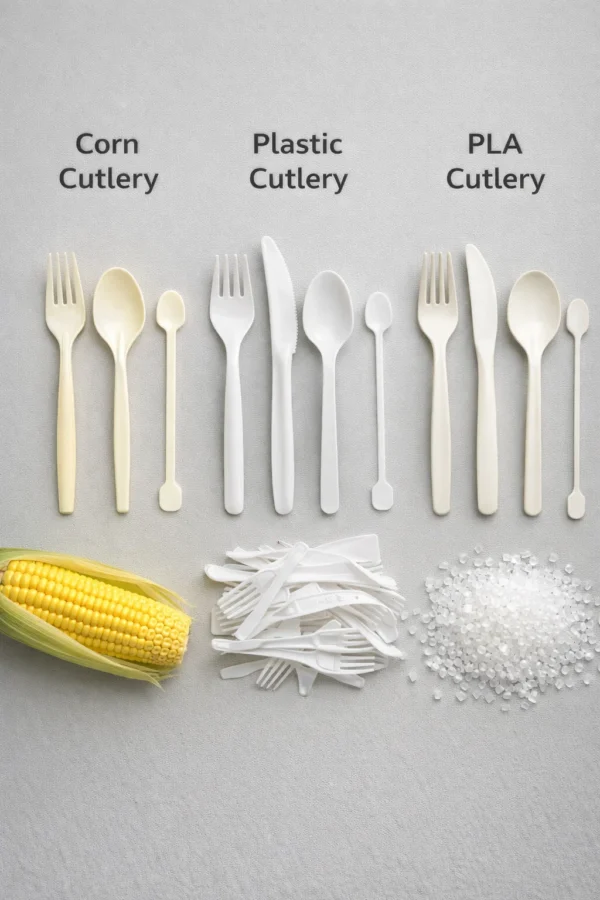
Corn Cutlery vs Plastic vs PLA Cutlery
Feature | Corn Cutlery | Plastic Cutlery | PLA / CPLA Cutlery |
Material | Plant-based (cornstarch) | Petroleum-based | Plant-based (PLA) |
BPA-free | Yes | Often no | Yes |
Biodegradable | Yes (industrial) | No | Yes |
Heat resistance | Up to ~120°C | High | Higher (CPLA) |
Cost | Medium | Low | High |
Eco impact | Low | High | Low |
Why many F&B businesses choose corn cutlery:
It balances cost, durability, and sustainability, making it ideal for daily commercial use.
Is Corn Cutlery Truly Biodegradable?
Yes, with proper disposal.
Corn cutlery is classified as biodegradable cutlery, meaning it can break down in industrial composting facilities under controlled heat and humidity. Decomposition typically occurs within 90–120 days.
Note: Home composting conditions may not be sufficient.
Storage & Shelf Life
- Shelf life: 1.5–2.5 years
- Store in a cool, dry place
- Avoid prolonged exposure to heat or moisture
- Designed for single use only
Why F&B Brands Are Switching to Eco-Friendly Utensils
Consumers today actively support brands that care about sustainability. Using eco-friendly utensils sends a strong message:
- Enhances brand image
- Aligns with green regulations and policies
- Appeals to environmentally conscious customers
- Reduces long-term Environmental impact
A Smarter, Greener Cutlery Choice with Biogreen SG
As sustainability becomes increasingly important in the F&B industry, switching to eco-friendly alternatives is no longer just a trend—it’s a smart business decision. Corn cutlery provides a practical, cost-effective, and environmentally responsible solution for restaurants, cafés, caterers, and households looking to reduce plastic use without sacrificing performance.
At Biogreen SG, our corn cutlery is designed for restaurant-grade performance. It is strong and durable, suitable for hot and oily foods, and BPA-free for food safety. Made from plant-based, biodegradable materials, it supports your sustainability goals while delivering a reliable dining experience your customers can trust.
If you’re looking for dependable biodegradable cutlery that works as hard as your business does, corn cutlery is the smart choice.
Explore Biogreen SG’s eco-friendly cutlery solutions today and take a step toward a greener, more sustainable food service operation.
Looking for reliable corn cutlery supplier in Singapore? Explore our range here.
FAQ: Corn Cutlery
Is corn cutlery compostable or biodegradable?
Corn cutlery is biodegradable and can break down in around 1 year under suitable composting conditions. Actual decomposition time may vary depending on the environment.
Can corn cutlery be used for hot food?
Yes, most corn cutlery can withstand temperatures of around 100–120°C, making it suitable for hot meals and takeaway use.
Is corn cutlery better than plastic?
Yes. Unlike plastic, corn cutlery is made from renewable plant-based materials and has a significantly lower environmental impact, helping reduce long-term plastic waste.
Is cornstarch cutlery microwave safe?
Cornstarch cutlery is generally not recommended for microwave use unless explicitly stated by the manufacturer.