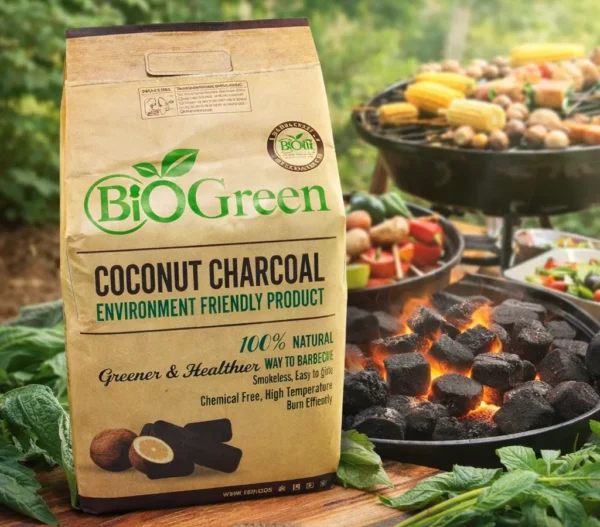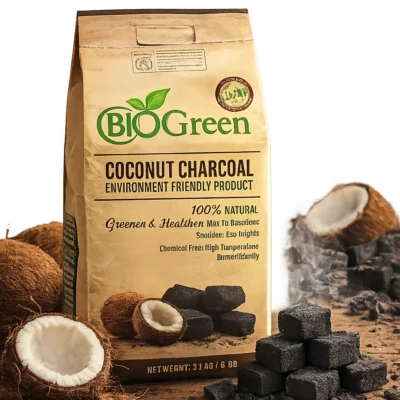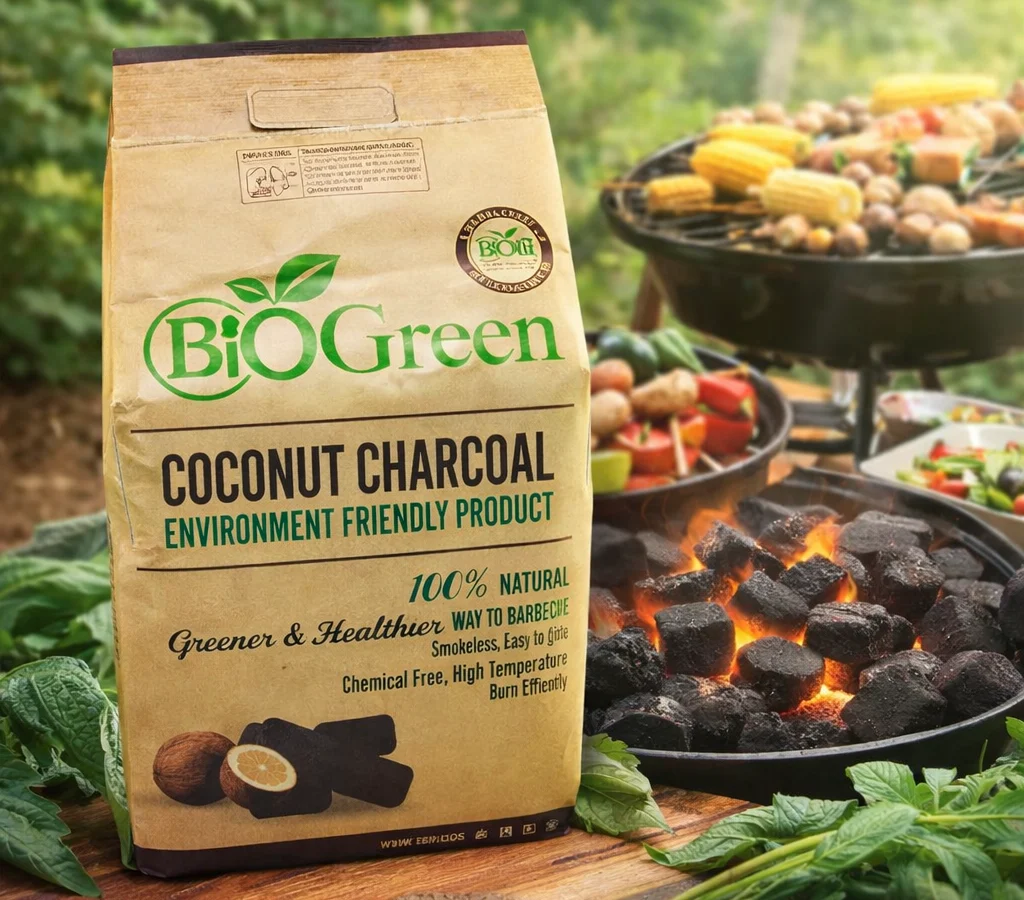
As businesses and households move toward greener practices, coconut charcoal is rapidly becoming the preferred alternative to traditional charcoal. Made from recycled coconut shells, this sustainable charcoal solution delivers powerful heat, longer burn time, and cleaner combustion — without contributing to deforestation.
From restaurants and cafés to catering services and BBQ enthusiasts, more users are choosing coconut shell charcoal for its consistent performance and environmentally friendly production process.
If you are searching for eco-friendly charcoal in Singapore, this comprehensive guide covers everything you need to know — including how coconut charcoal is made, its key benefits, commercial use cases, and how it compares to wood charcoal. Whether your priority is sustainability, efficiency, or restaurant-grade quality, coconut charcoal offers a smarter fuel solution for modern cooking.
What Is Coconut Charcoal?
Coconut charcoal (also called coconut coal) is a high-performance charcoal made primarily from recycled coconut shells. Instead of cutting trees, manufacturers convert agricultural waste into premium sustainable charcoal.
This makes it one of the most environmentally friendly charcoal options available for grilling and commercial cooking.
How Coconut Shell Charcoal Is Made
At BIOGreen SG, our coconut charcoal is produced using a controlled and safe carbonization process to ensure restaurant-grade performance.
Coconut Charcoal Production Process
- Collection of recycled coconut shells
- Carbonization in low-oxygen kilns
- Grinding into fine coconut shell charcoal powder
- Blending with natural edible starch
- Compression into briquettes (coconut coal blocks)
- Drying and quality inspection
Why Coconut Charcoal Is Considered Sustainable Charcoal
Traditional charcoal production often involves deforestation. In contrast, coconut charcoal uses discarded coconut shells — a renewable byproduct of the coconut industry.
Environmental Advantages of Coconut Charcoal
- Made from recycled coconut shells
- Reduces agricultural waste
- Prevents tree cutting
- Lower smoke emission
- Minimal ash residue
- Lower environmental pollution
Because of this, coconut charcoal is widely recognized as eco-friendly charcoal for both domestic and commercial applications.
Top Benefits of Coconut Charcoal
Coconut charcoal burns longer than regular wood charcoal. This reduces:
- Refueling frequency
- Operational downtime
- Fuel consumption cost
For restaurants and BBQ businesses, this means smoother service operations.
- High and Consistent Heat Output
Coconut shell charcoal produces steady, high heat that supports:
- Even grilling
- Professional cooking results
- Efficient food preparation
It is especially suitable for steak houses, BBQ restaurants, and yakitori outlets.
- Low Smoke & Clean Burning
One major advantage of coconut coal is its clean combustion.
It produces:
- Less smoke
- Less odor
- Fewer carbon deposits on food
This makes it ideal for:
- Semi-indoor kitchens
- Catering events
- Premium restaurant environments
- Non-Toxic & Chemical-Free
BIOGreen SG coconut charcoal contains no chemical additives.
It has been tested for:
- Chromium
- Lead
- Cadmium
- Mercury
All results comply with ROHS safety standards.
For F&B businesses, using non-toxic charcoal improves food safety credibility.
Compared to traditional charcoal, coconut charcoal produces significantly less ash.
This means:
- Cleaner grills
- Faster cleanup
- Lower maintenance
- Better hygiene standards
For restaurants, this reduces labor time and cleaning costs.
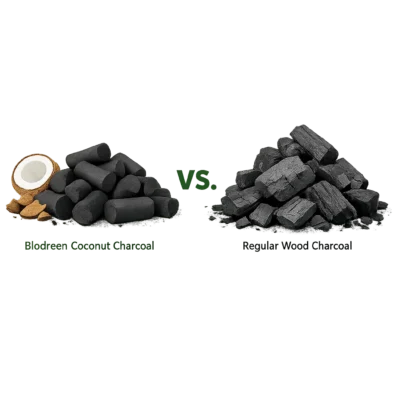
Coconut Charcoal vs Wood Charcoal: Which Is Better?
Many users search for “wood charcoal vs coconut charcoal” to compare performance.
Here is a clear comparison:
Feature | Coconut Charcoal | Wood Charcoal |
Raw Material | Recycled coconut shells | Hardwood / softwood |
Sustainability | Highly sustainable | May cause deforestation |
Burning Duration | Longer | Moderate |
Smoke Output | Low | Higher |
Ash Residue | Minimal | Higher |
Odor | Mild | Strong smoky smell |
Environmental Impact | Lower | Higher |
Best For | Restaurants, export, eco brands | Casual BBQ |
Choose Coconut Charcoal If:
- You want sustainable charcoal
- Your brand emphasizes eco responsibility
- You need consistent heat for long hours
- You prefer cleaner cooking environments
Commercial Use Cases for Coconut Charcoal
- Restaurants & BBQ Chains
High-end restaurants prefer coconut charcoal because:
- It burns consistently from lunch to dinner
- It supports food presentation
- It produces less smoke indoors
- It aligns with sustainability branding
- Catering Businesses
For outdoor catering:
- Long burn time reduces refueling
- Stable heat ensures consistent food quality
- Cleaner burning improves guest comfort
- Export & Wholesale Markets
Coconut shell charcoal is popular in international markets because it is seen as premium and environmentally friendly charcoal.
- Households & BBQ Enthusiasts
Home users benefit from:
- Easy heat control
- Minimal smoke disturbance
- Cleaner taste
- Convenient cleanup
Is Coconut Charcoal the Best Sustainable Charcoal for Modern Cooking?
For restaurants, cafés, catering businesses, and eco-conscious households, coconut charcoal has become one of the most reliable and environmentally friendly charcoal options available today.
Made primarily from recycled coconut shells, coconut shell charcoal delivers:
- High and consistent heat performance
- Long-lasting burn time
- Low smoke and minimal ash
- Cleaner combustion
- Reduced Environmental impact
Unlike traditional charcoal, coconut charcoal supports sustainable practices while maintaining restaurant-grade cooking results. As more consumers prioritize eco-friendly operations, switching to sustainable charcoal strengthens both operational efficiency and brand credibility.
Upgrade to Premium Coconut Charcoal in Singapore
If you are looking for high-quality coconut charcoal in Singapore, BIOGreen SG offers a performance-driven solution designed for professional use.
Our coconut charcoal features:
- 75% recycled coconut shell content
- Strong and stable briquette structure
- Long burn efficiency with steady heat
- Low smoke, low ash output
- Chemical-free, non-toxic formulation
Whether you run a restaurant, catering business, or simply enjoy weekend BBQs, choosing eco-friendly charcoal ensures cleaner cooking and smarter fuel management.
Contact BIOGreen SG today to explore our full range of coconut charcoal and sustainable food packaging solutions — and make the switch to cleaner, more efficient grilling.