
Sustainable Packaging: What It Is, Why It Matters & How Businesses Can Benefit

As environmental concerns continue to rise, sustainable packaging has become a top priority for restaurants, cafés, and businesses across Singapore. Customers today are no longer just buying food—they are supporting brands that align with their values.
From reducing plastic waste to improving brand image, switching to eco-friendly packaging is no longer optional—it’s a competitive advantage.
In this guide, we’ll explore everything you need to know about sustainable packaging, including materials, benefits, comparisons, and how your business can make the switch effectively.
What Is Sustainable Packaging?
Sustainable packaging refers to packaging solutions designed to minimise environmental impact throughout their lifecycle—from production to disposal.
Key Characteristics of Sustainable Packaging Materials:
- Made from renewable resources (e.g., cornstarch, sugarcane bagasse)
- Designed to be biodegradable or compostable
- Reduces reliance on fossil fuels
- Generates less waste and carbon emissions
Common examples include:
- Biodegradable packaging like cornstarch containers
- Compostable packaging such as bagasse plates
- Paper-based food packaging with eco-friendly coatings
In the F&B industry, this often translates into sustainable food packaging that maintains performance while being environmentally responsible.
Why Sustainable Packaging Is Important
The global plastic problem is growing rapidly, and traditional packaging contributes significantly to pollution.
Key Environmental Issues:
- Over 380 million tonnes of plastic produced annually
- Plastic can take hundreds of years to break down
- Landfills and oceans are heavily impacted
Why Businesses Should Care:
- Customers prefer eco-conscious brands
- Governments are tightening regulations
- Sustainability builds long-term brand trust
Switching to eco-friendly packaging is not just about the environment, it’s also about staying relevant in today’s market.
Types of Sustainable Packaging
Understanding the different types of sustainable packaging materials helps businesses make better decisions.
- Biodegradable Packaging
Biodegradable materials break down naturally with the help of microorganisms.
Examples:
- Cornstarch food containers
- Biodegradable garbage bags
- Plant-based cutlery
Key Benefit:
- Reduces long-term waste accumulation
- Compostable Packaging
Compostable packaging is a subset of biodegradable materials, but with stricter conditions.
Examples:
- Bagasse (sugarcane fiber) plates
- Compostable takeaway containers
Key Benefit:
- Breaks down into nutrient-rich compost under controlled conditions
- Recyclable Packaging
Materials that can be processed and reused.
Examples:
Key Benefit:
- Reduces resource consumption
Biodegradable vs Compostable: What’s the Difference?
This is one of the most common questions in the packaging industry.
Feature | Biodegradable Packaging | Compostable Packaging |
Breakdown Process | Natural over time | Controlled composting conditions |
Timeframe | Varies widely | Usually within months (industrial composting) |
Result | Water, CO₂, biomass | Nutrient-rich compost |
Certification | Not always required | Requires standards (e.g., ASTM, EN) |
Key Takeaway:
- All compostable packaging is biodegradable
- Not all biodegradable packaging is compostable
For F&B businesses, compostable options are often preferred when proper waste systems are available.
Benefits of Sustainable Packaging for Businesses
Switching to sustainable packaging offers more than just environmental benefits.
Customers are more likely to support brands that care about sustainability.
- Build trust and loyalty
- Differentiates your business from competitors
- Meets Customer Expectations
Modern consumers actively look for:
- Biodegradable packaging
- Eco friendly packaging
- Plastic-free alternatives
Sustainability can directly influence purchasing decisions.
- Reduces Environmental Impact
- Less landfill waste
- Lower carbon footprint
- Reduced Plastic Pollution
- Supports Regulatory Compliance
Governments worldwide are introducing:
- Plastic bans
- Sustainability guidelines
Using sustainable packaging materials helps businesses stay compliant.
- Strong Performance for F&B Use
Modern eco packaging is designed for real-world use:
- Leak-proof containers
- Heat-resistant materials
- Durable and sturdy structure
Sustainability does not mean compromising quality.
Sustainable Packaging vs Traditional Plastic
Let’s compare sustainable packaging with traditional plastic packaging.
Feature | Sustainable Packaging | Plastic Packaging |
Material Source | Renewable (plants) | Fossil fuels |
Environmental Impact | Low | High |
Decomposition | Biodegradable/compostable | Takes hundreds of years |
Brand Perception | Positive | Negative |
Cost | Slightly higher | Lower upfront |
Key Insight:
While plastic may be cheaper upfront, sustainable packaging delivers long-term value through branding, customer trust, and environmental impact.
Challenges of Sustainable Packaging (And How to Overcome Them)
While the benefits are clear, businesses may face some challenges.
- Higher Cost
Solution:
- Buy in bulk
- Position as a premium brand
- Disposal Confusion
Many people don’t understand biodegradable vs compostable.
Solution:
- Educating customers
- Label packaging clearly
- Limited Infrastructure
Not all regions have composting facilities.
Solution:
- Use biodegradable options
- Partner with waste management providers
How to Choose the Right Sustainable Packaging
When selecting sustainable food packaging, consider:
- Type of Food
- Hot food → Heat-resistant containers
- Soups → Leak-proof bowls
- Business Model
- Dine-in vs takeaway
- Delivery vs retail
- Sustainability Goals
- Fully compostable system
- Partial biodegradable switch
- Product Quality
Look for:
- Strong durability
- Leak-proof design
- Food-grade certification
Why More Businesses Are Switching to Sustainable Packaging
The shift is happening fast—and for good reason.
Market Trends:
- Growing demand for eco-friendly packaging
- Increased awareness of environmental issues
- Stronger ESG (Environmental, Social, Governance) focus
Businesses that adapt early gain a competitive advantage.
The Future of Sustainable Food Packaging
The future is clear—sustainable packaging will become the industry standard.
We can expect:
- More innovation in plant-based materials
- Better composting infrastructure
- Stronger regulations on plastic
Early adoption positions your business as a forward-thinking brand.
Why Sustainable Packaging Matters for Your Business
The shift towards sustainable packaging is no longer optional, but it has become an essential part of running a modern F&B business. As customer expectations evolve, businesses that adopt eco-friendly packaging, including biodegradable packaging and compostable packaging, are better positioned to stay competitive in the market.
Making the transition brings long-term value beyond environmental impact. It helps businesses:
- Reduce waste and support sustainability goals
- Build a stronger, more responsible brand image
- Meet growing demand for sustainable food packaging
- Stay aligned with industry trends and regulations
At the same time, today’s sustainable packaging materials are designed to perform just as well as traditional options. From durability to leak-proof performance, businesses no longer need to compromise on quality.
For F&B operations looking to make the switch, choosing the right supplier is key. Solutions that are reliable, food-safe, and suitable for daily use—such as cornstarch containers, garbage bags, and other eco-friendly packaging products—can support a smooth transition without disrupting operations.
As sustainability continues to shape the future of the industry, adopting sustainable packaging is a practical step forward—for both your business and the environment.
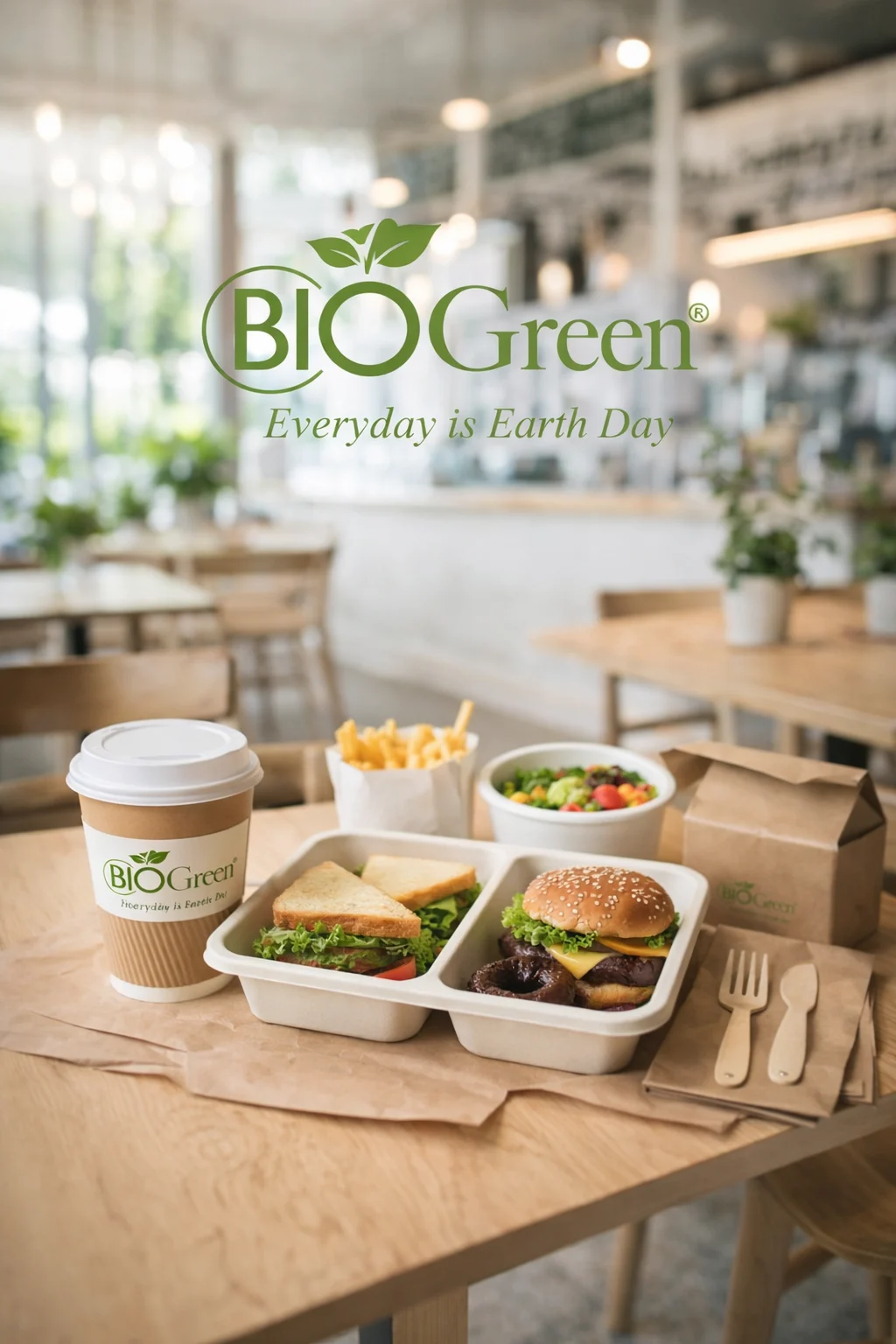
**Disclaimer: The images in this article are provided for illustration purposes only to help readers visualise product applications and packaging ideas. Some images may feature conceptual or customised designs that are not available from BIOGreen. Actual products, packaging, colours, sizes, and customisation options may vary. Please contact our team for the latest product specifications and available customisation services.